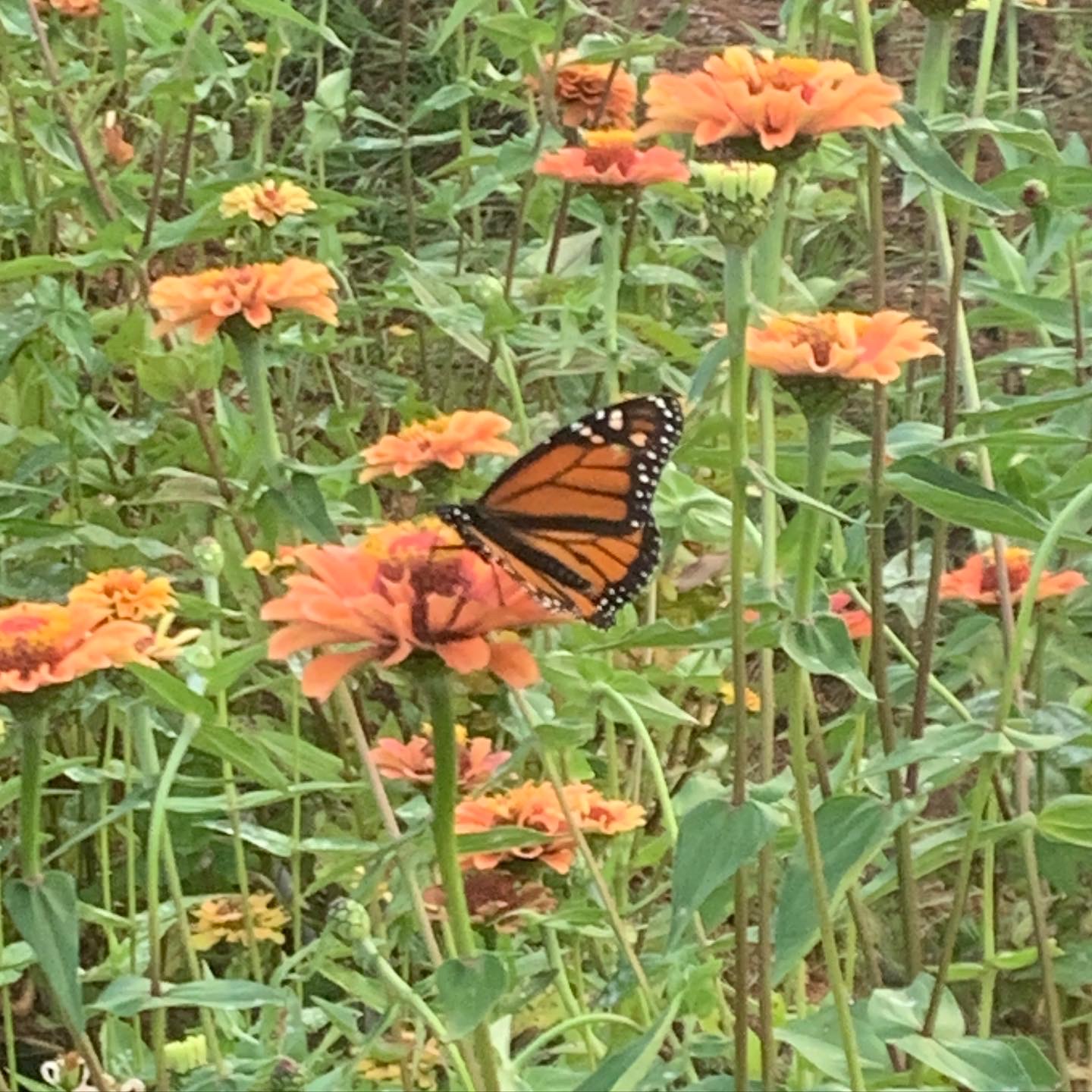
I would love for all neighborhoods to be filled with flowers and herbs where pollinators can flit, flutter, float and buzz around from plant to plant. The interesting thing about pollinators such as butterflies, is that they love all sunny and flower-filled gardens! If you are growing plants with colorful flowers, you will most likely have butterflies. If you are growing passion flower vine, or if it has snuck into your garden, you will most likely see Gulf Fritillary Butterfly larvae and eventually their beautiful transformation into a butterfly.
Butterflies, like birds and other small animals are drawn to areas that provide water, food, and shelter. Butterflies enjoy the warmth of the sun, so locate your butterfly garden in a sunny area. If your yard is windy, consider planting your garden along a fence, hedge or building. Avoid using chemical pesticides because they can kill butterflies at all stages of life. Providing a warm resting spot by placing a board or a few flat stones around the garden can also help to attract butterflies. It is important to provide food plants for the caterpillars of butterflies as well. This includes milkweed, thistle, clover, goldenrod and other native plants. Several of these plants have a habit of taking over a garden, so plant them where their invasive habit won’t be too intrusive. Butterfly caterpillars also enjoy carrots, dill, parsley and nasturtium.
Flowering annuals such as marigolds, zinnias, lantana, pentas, cosmos, and sunflowers are sure to attract several species of butterflies to your garden. Perennials such as purple coneflower, buddleia (butterfly bush), yarrow, and salvia are great choices for not only a beautiful but a butterfly-friendly garden.

Many of us have heard that milkweed is an important addition to a butterfly garden. Not only is it the only host plant for monarch butterfly larvae, it is also a host for many species of native butterflies. Milkweed in the genus Asclepias and includes more than 150 species that grow and in full sun and bloom during the summer. These plants contain milky sap that was once considered a good substitute for rubber. It also contains compounds that repel some pests, so it is a useful companion plant or other flowers and vegetables as well. According to some sources, many Native American tribes used milkweed plants medicinally. The sap was used to remove warts and treat other skin ailments. Additionally, a tonic from the roots was used to treat respiratory ailments.
If you are eager to attract butterflies to your garden this year, head out to a local plant nursery where helpful staff can point you into the direction of butterfly-friendly plants.

Leave a Reply